Photo Gallery
Research on Hydro Geomatic





Land use and land cover change (LULCC) and global climate change (GCC) pose severe threats to biodiversity, particularly for endemic species with restricted distributions. The bird genus Hylorchilus, comprising H. sumichrasti and H. navai, is highly vulnerable within Mexico’s karst mountain forests. These species are classified as Near Threatened and Vulnerable by the IUCN, respectively. Hylorchilus sumichrasti lacks protection within protected natural areas, while H. navai has limited coverage within protected zones. Although LULCC has been identified as a major threat for both species, the contemporary LULCC dynamics within their distribution ranges and the potential impact of GCC on their future distributions have not been assessed. This study uses ecological niche models (ENMs) and remote sensing tools to evaluate current and future geographic and environmental distributions, alongside changes in LULCC in their distribution over the past three decades. ENMs projections for 2050 and 2090 under two Shared Socioeconomic Pathways (SSP1–2.6 and SSP5–8.5) and three General Circulation Models predict significant losses and/or gains in environmentally suitable areas, depending on the species. For H. sumichrasti, suitable areas are projected to decline under all scenarios, with only 62.8% remaining under the pessimistic scenario. Opportunities to occupy new suitable areas in the future are negligible. In contrast, H. navai is expected to experience a modest increase in suitable areas under optimistic scenarios (10.5% by 2050, 3.71% by 2090) but a significant decline under pessimistic conditions, retaining only 58.82% of its current range by 2090. LULCC analyses indicate that over the past three decades, evergreen forest, dry forest, and secondary succession—critical habitats for both species—have declined, while cropland and urban areas have expanded. These findings highlight the urgent need for conservation actions, including the establishment of protected areas within key areas, to mitigate environmental threats and safeguard the biodiversity of Mexico’s karst mountain forests.
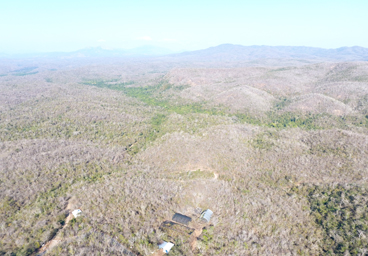
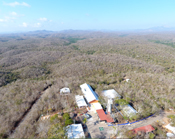
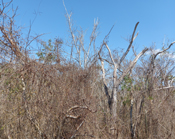
Tropical dry forest from Chamela, Jalisco, Mexico.
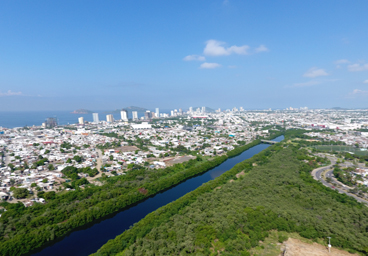
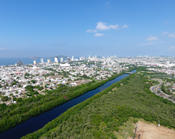
Small patches of mangrove within the city of Mazatlan, Mexico.
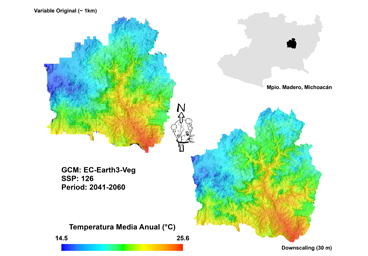
Land use and land cover map from the Patzcuaro watershed.